Encerrou sessão com sucesso.

Descubra novos espaços para a fusão

Dispositivos de fusão intercorporal 3D AESCULAP®

Inspiradas na anatomia humana e potenciadas pela ciência, nossos implantes combinam avanços tecnológicos com valores clínicos. O resultado é um grande avanço na estabilização anterior e posterior.

  • A área da superfície é ampliada por

    0

    vezes, proporcionando mais oportunidades para o crescimento ósseo.

  • Resistente e elástico ao mesmo tempo – Structan® é

    0%

    mais próximo do módulo de elasticidade do osso cortical. (1-4) *

  • Cubra a estabilização posterior apenas com

    0

    plataforma espinhal modular que se adapta com precisão às suas necessidades.

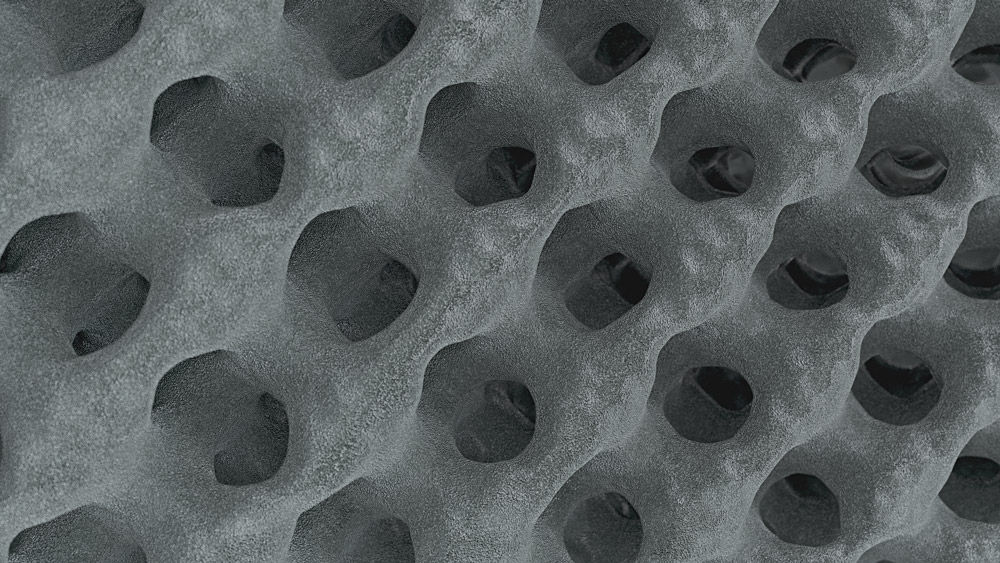
Rede macro

A rugosidade da superfície finamente equilibrada tem uma influência positiva na adesão dos osteoblastos. A porosidade se alinha com a anatomia humana. Isso cria uma base sólida para o crescimento ósseo e, consequentemente, a fusão com Structan®.[5-8]

Microestrutura

Diferenciação osteoblástica substancial e melhora da osseointegração – com base em evidências científicas, nossos Implantes AESCULAP® 3D refletem as características biológicas da estrutura trabecular, favorecendo o crescimento ósseo.[9-15]

Revela mais espaço

Janela de enxerto com design inteligente para apoiar a osseointegração entre o osso e o implante – com ou sem autoenxerto ou aloenxerto.

Interface inteligente

A interface harmonizada proporciona uma conexão firme com os instrumentos e alta precisão durante o manuseio. Sinta tudo isso com nosso inseridor articulado em procedimentos TLIF – porque a confiança traz tranquilidade.

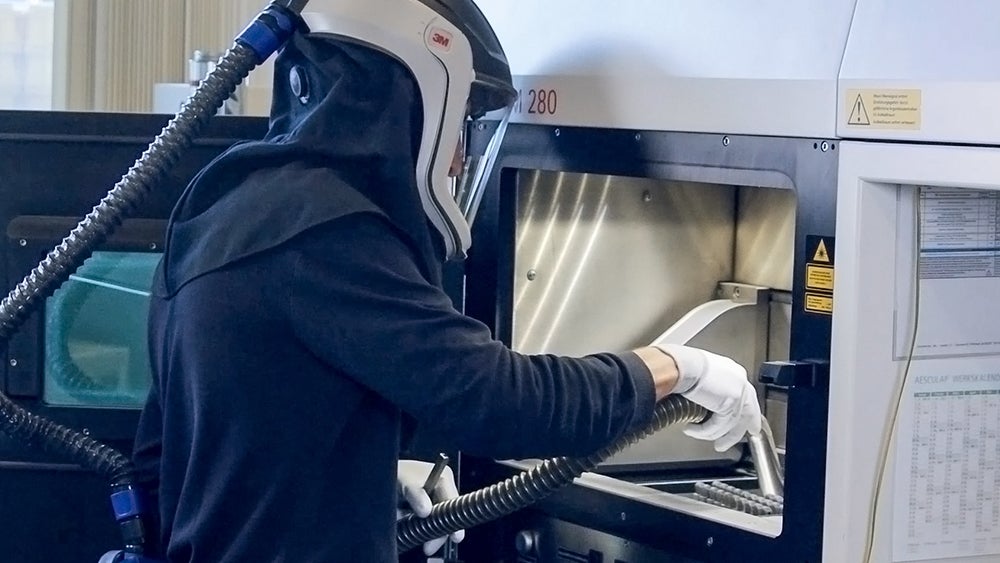
Manufacturing spinal implants with the latest laser sintering technology
Fabricação aditiva – Impressão de implantes 3D
Manufacturing spinal implants with the latest laser sintering technology

Referências

*compared to solid titanium alloy interbody fusion devices.


  1. Kuhn JL, Goldstein SA, Choi K, London M, Feldkamp LA, Matthews LS. Comparison of the trabecular and cortical tissue moduli from human iliac crests. J Orthop Res. 1989;7(6):876 84.
  2. Ratner BD, Hoffmann AS, Schoen FJ, Lemons JE. An Introduction to Materials in Medicine. Academic Press. 1996.
  3. Chen Y, Wang X, Lu X, Yang L, Yang H, Yuan W, et al. Comparison of titanium and polyetheretherketone (PEEK) cages in the surgical treatment of multilevel cervical spondylotic myelopathy: a prospective, randomized, control study with over 7 year follow up. Eur Spine J. 2013;22(7):1539 46.
  4. Brizuela A, et al. Influence of the elastic modulus on the Osseointegration of Dental Implants. Materials. 2019;12(6):980.
  5. Bostrom M, Boskey A, Kaufman J, Einhorn T. Form and function of bone. In: Orthopaedic Basic Science Biology and Mechanics of the Musculoskeletal System. 2nd ed. Rosemont, IL: AAOS; 2000: 320-369.
  6. Olivares-Navarrete R, Gittens RA, Schneider JM, et al. Rough titanium alloys regulate osteoblast production of angiogenic factors. Spine J 2012; 12:265-272.
  7. Lincks, J. et al. Response of MG63 osteoblast-like cells to titanium and titanium alloy is dependent on surface roughness and composition. Biomaterials 19, 1998. Pages 2219-32.
  8. Elias CN, et al. Mechanical and clinical properties of titanium and titanium based alloys ( Ti G2, Ti G4 cold worked nanostructured and Ti G5) for biomedical applications. Journal of Materials Research and Technology. 2019;8(1):1060 9.
  9. Cheng A, Cohen D, Boyan B et al. Laser-Sintered Constructs with Bio-inspired Porosity and Surface Micro/ Nano-Roughness Enhance Mesenchymal Stem Cell Differentiation and Matrix Mineralization In Vitro. Calcif Tissue Int 2016; 99:625–637.
  10. Wu S-H, Li Y, Zang Y-Q, et al. Porous Titanium-6 Aluminum-4 Vanadium Cage Has Better Osseointegration and Less Micromotion Than a Poly-Ether-Ether-Ketone Cage in Sheep Vertebral Fusion. Art Organs 2013; 37:191-201
  11. Taniguchi N, Fujibayashi S, Takemoto M, Sasaki K, Otsuki B, Nakamura T, Matsushita T, Kokubo T, Matsuda S. Effect of pore size on bone ingrowth into porous titanium implants fabricated by additive manufacturing: An in vivo experiment. Materials Science and Engineering 2016; C59: 690–701.
  12. Changhui Song, Lisha Liu, Zhengtai Deng, Haoyang Lei, Fuzhen Yuan, Yongqiang Yang, Yueyue Li, Jiakuo Yu. Research progress on the design and performance of porous titanium alloy bone implants. Journal of Materials Research and Technology, Volume 23, 2023. Pages 2626-2641, ISSN 2238-7854.
  13. Fukuda A, Takemoto M, Saito T, et al. Osteoinduction of porous Ti implants with a channel structure fabricated by Selective Laser Melting. Acta Biomat 2011; 7:2327-2336.
  14. Ran Q, Yang W, Hu Y, Shen X, Yu Y, Xiang Y, Cai K. Osteogenesis of 3D printed porous Ti6Al4V implants with different pore sizes. J Mech Behav Biomed Mater. 2018 Aug;84:1-11. doi: 10.1016/j.jmbbm.2018.04.010. Epub 2018 Apr 18. PMID: 29709846.
  15. Van Bael S, Chai YC, Truscello S, Moesen M, Kerckhofs G, Van Oosterwyck H, Kruth JP, Schrooten J. The effect of pore geometry on the in vitro biological behavior of human periosteum-derived cells seeded on selective laser-melted Ti6Al4V bone scaffolds. Acta Biomater. 2012 Jul;8(7):2824-34. doi: 10.1016/j.actbio.2012.04.001. Epub 2012 Apr 7. PMID: 22487930.
  16. Kia, C.; Antonacci, C.L.; Wellington, I.; Makanji, H.S.; Esmende, S.M. Spinal Implant Osseointegration and the Role of 3D Printing: An Analysis and Review of the Literature. Bioengineering 2022, 9, 108. https://doi.org/10.3390/bioengineering9030108.
  17. Usability-Test, Usability Validation of AESCULAP® CeSPACE® 3D Cages, Tübingen, 2019.The usability of the AESCULAP® 3D Cage System CeSPACE® 3D was tested in April 2019, in a cadaver workshop with six independent test persons as intended users (surgeons specialized in spinal surgery or comparable fields). Parameters such as implant visibility under x-ray control, mechanical stability of the implant/instrument interface andimplant surface evaluation in terms of tissue injury risk were tested among others. Acceptance criteria were fulfilled for all the above-mentioned parameters. All test users confirmed the absence of critical features that must be improved prior to clinical use. During the test, the x-ray visibility of the cages was particularly positively assessed.
  18. Rehnitz, Christoph, PD Dr. med. Radiological image evaluation of AESCULAP® interbody fusion devices, Heidelberg, 2019. CT and X-ray visualization of different AESCULAP® interbody fusion cages (full titanium, porous Ti6Al4V and PLASMAPOREXP® cages) was tested in a cadaver setup. A radiologist evaluated the implant visibility and the presence of artefacts that may limit the visualization of adjacent structures. Visualization and assessment of implant position was achieved in X-ray and CT for all tested cages. Minor artefacts were visible in CT reconstructions in the surrounding of porous Ti6Al4V and full titanium implants. Porous Ti6Al4V implants showed slightly fewer artefacts in CT in comparison to full titanium implants. The minor artefacts observed did not limit the assessment of the surrounding anatomical structures.