Nenhum resultado de conteúdo corresponde à sua palavra-chave.
Resultados

Encerrou sessão com sucesso.


Ainda não está registrado?
Alternativa aos antibióticos no tratamento de feridas
Nos países desenvolvidos, estima-se que 1 a 2% da população sofrerá de uma ferida crônica ao longo da vida. O peso das feridas crônicas e do tratamento de feridas está aumentando rapidamente.[1]As infecções das feridas podem comprometer o processo de cicatrização e permitir que as feridas se transformem em feridas crônicas, com um impacto negativo significativo na qualidade de vida relacionada à saúde.[2,3] Pior ainda, correm o risco de amputação e sepse letal.[4] Além disso, feridas infectadas representam um grande fardo para o sistema de saúde.[2,3]
É de extrema importância encontrar a melhor estratégia para prevenir, diagnosticar e tratar infecções em feridas.
Mais de
0%
das feridas crônicas são consideradas infectadas.[5,6]
Até
0%
das feridas crônicas contêm biofilme com um papel na infecção da ferida.[7,8,9,10]
Feridas crônicas
O processo de infecção da ferida analisa os diferentes estágios da infecção da ferida, desde a contaminação inicial até a sepse evidente.[11,12] Este conceito pode ajudar os profissionais de cuidados com feridas a encontrar a melhor estratégia para prevenir, diagnosticar e tratar infecções em feridas. Conheça o nosso conceito terapêutico que abrange todas as fases do processo de infecção da ferida: Prontosan® para prevenir a formação de biofilme e diminuir a carga bacteriana, e Askina® Calgitrol®, uma gama de curativos com prata, que proporcionam uma atividade antimicrobiana auxiliar e ajudam a prevenir a contaminação por bactérias externas.
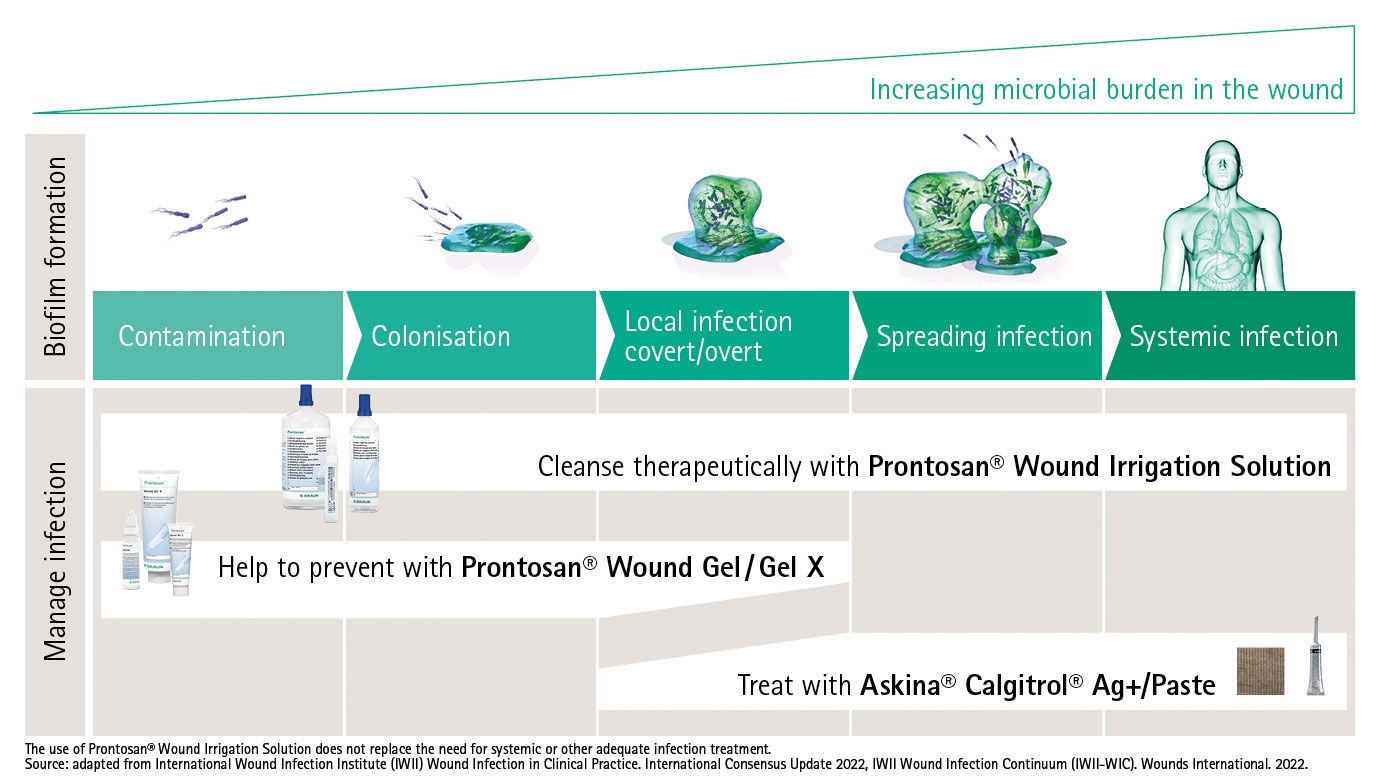
Uma avaliação completa da ferida é essencial para prevenir e tratar infecções e todos os tipos de complicações que podem acompanhá-las.[13,14] O diagnóstico adequado e as estratégias de seleção de produtos podem ajudá-lo a prevenir e tratar infecções em feridas. Prontosan® e Askina® Calgitrol® são uma ótima combinação no combate às infecções de feridas.
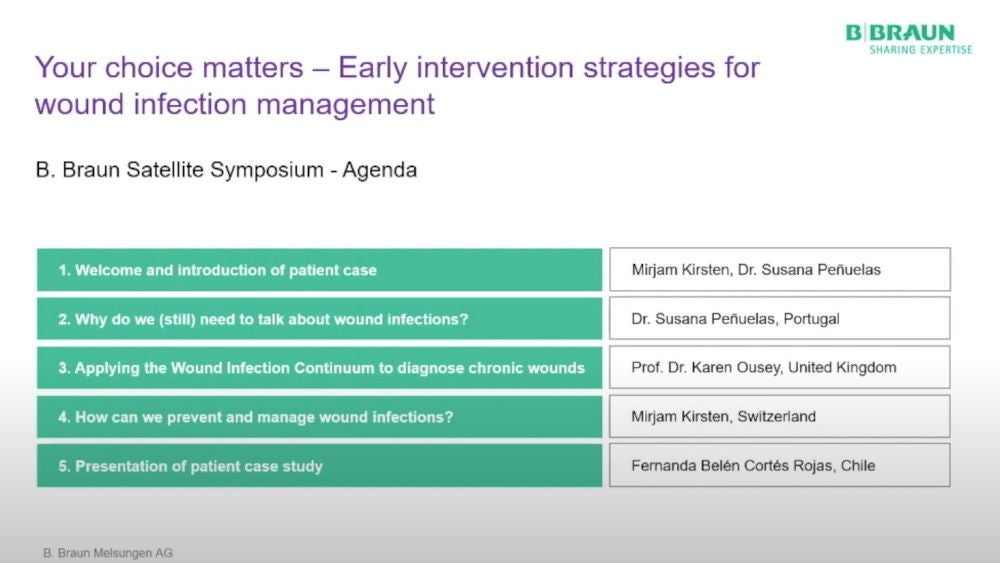
Essa combinação ajudou a restaurar a saúde do paciente Miguel, cujo histórico de caso clínico foi apresentado durante nosso simpósio na EWMA 2022 para apresentar perspectivas práticas. Neste simpósio, focamos na importância de reconhecer os sinais de uma infecção em desenvolvimento na ferida e como avaliá-los usando o Processo de Infecção da Ferida.
Sua escolha é importante – como você teria tratado a ferida de Miguel? Convidamos você a assistir o vídeo do nosso simpósio.
Opinião de especialista
Os seguintes estudos de caso foram realizados para avaliar a eficácia de um removedor/limpador de biofilme em forma de gel - Prontosan.® em conjunto com o uso de um alginato de prata com libertação iônica - Askina® Calgitrol® Pasta ou Askina® Calgitrol® Fino - quando usado em feridas infectadas.
Todas as feridas apresentaram uma redução significativa dos sinais clínicos de infecção na primeira semana de tratamento. Cerca de 50% de todas as infecções em feridas foram completamente resolvidas na semana 2. Oitenta e um por cento de todas as feridas não apresentaram sinais clínicos de infecção em menos de 3 semanas. Nenhum dos pacientes recebeu antibióticos por via oral ou intravenosa durante o estudo; todos os pacientes foram tratados apenas com antimicrobianos locais. Houve também uma diminuição do odor em todas as feridas.
Leia o relato completo do casoAs infecções de feridas são causadas pelo depósito e proliferação de microrganismos no sítio cirúrgico de um hospedeiro suscetível. Existem inúmeras maneiras pelas quais os microrganismos podem entrar no leito da ferida. A infecção pode resultar em sepse quando as bactérias se espalham pela corrente sanguínea, o que é chamado de bacteremia, podendo evoluir para uma sepse com risco de vida e falência de múltiplos órgãos.[15]
O principal objetivo é prevenir infecções, em vez de tratá-las.
Em contato com o exsudato da ferida, o curativo Askina® Calgitrol® libera prata antimicrobiana. Simultaneamente, mantém um ambiente úmido na ferida, propício às condições naturais de cicatrização, e ajuda a prevenir a contaminação por bactérias externas.[16]
Sabe-se que o uso excessivo e indevido de antibióticos na medicina contribuiu principalmente para o problema. Como resultado, a RAM surge como um risco progressivo para a saúde pública global e tem sido avaliada como o maior perigo para a saúde no século XXI.[17,18]

Se um plano de ação eficaz não for implementado, a taxa de mortalidade anual deverá atingir 10 milhões de mortes por ano até 2050.[19,20]
A perda de capital causada pela resistência antimicrobiana é estimada globalmente em aproximadamente US$ 300 bilhões a US$ 1 trilhão até 2050.[17]
Ajudar a implementar uma estratégia para evitar o uso excessivo de antibióticos e, assim, diminuir a resistência antimicrobiana.
